

Coops & Runs
How to Winterize a Chicken Coop: A Practical Cold-Weather Checklist
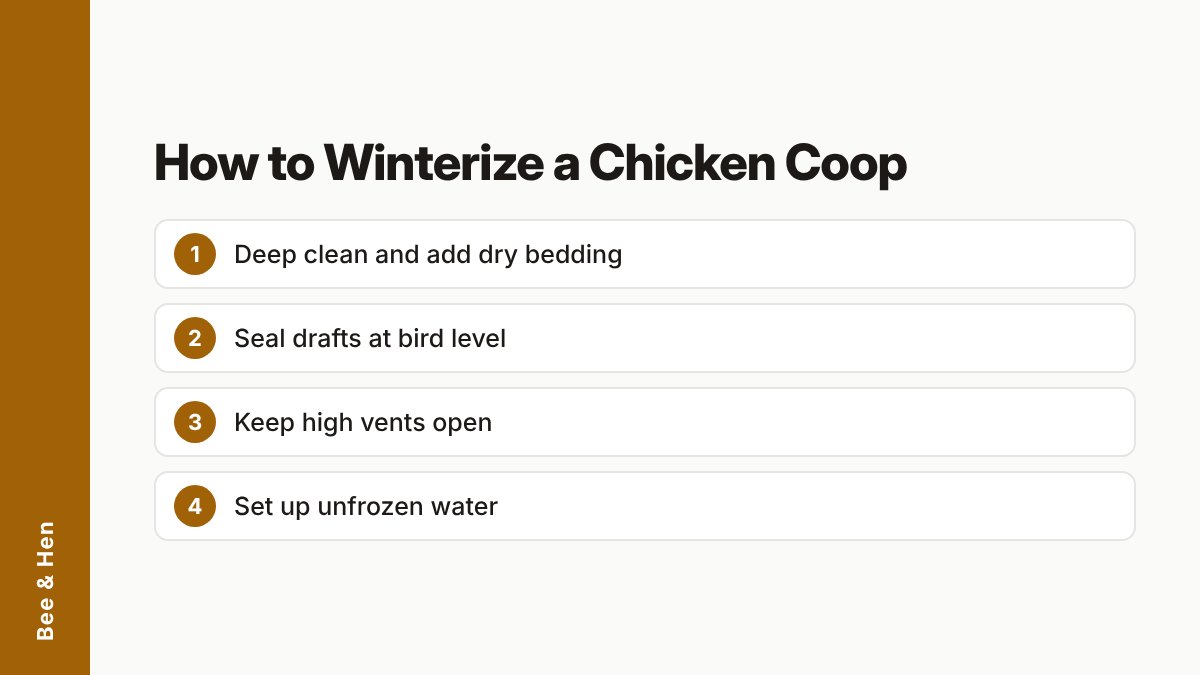
Winterize your chicken coop the safe way: block drafts, keep ventilation, set up bedding and unfrozen water, and decide if heat is needed.
Coops and Runs That Keep Hens Safe and Dry
A coop is more than a box with a roof. Poor ventilation brings damp and respiratory trouble, weak latches invite raccoons, and a run with thin wire or gaps can fail on the first night a predator visits. Many first coops are also too small once the flock grows, which leads to stress and pecking.
The guides here help you plan and build or buy a coop that fits your flock, climate and budget. You learn how much floor and roost space hens need, how to place nest boxes and pop doors, how to cover a run against hawks and digging animals, and how to keep bedding fresh with less work. Step-by-step articles explain materials and tools in plain language. For electrical work, heavy structural builds or questions about zoning and permits, check local codes and bring in a qualified builder or electrician when the job goes beyond basic carpentry.
Winterize your chicken coop the safe way: block drafts, keep ventilation, set up bedding and unfrozen water, and decide if heat is needed.