How to Keep Chicken Water From Freezing in Winter
Keep your flock's water unfrozen all winter: heated waterers and bases, no-power tricks, safe electrical setup and a simple twice-daily check routine.
 Save
To keep chicken water from freezing, use a heated waterer or a heated base made for poultry, keep it raised off the bedding, and check it at least twice a day. If you have no power at the coop, a rotation of two waterers, one thawing indoors while the other is in use, works well. Chickens stop eating when they cannot drink, so unfrozen water is one of the most important winter jobs.
Quick answer: pick a method
| Method | Needs power? | Best for | Main drawback |
|---|---|---|---|
| Heated plastic fountain | Yes | Small to medium flocks | Needs a safe outlet and cord route |
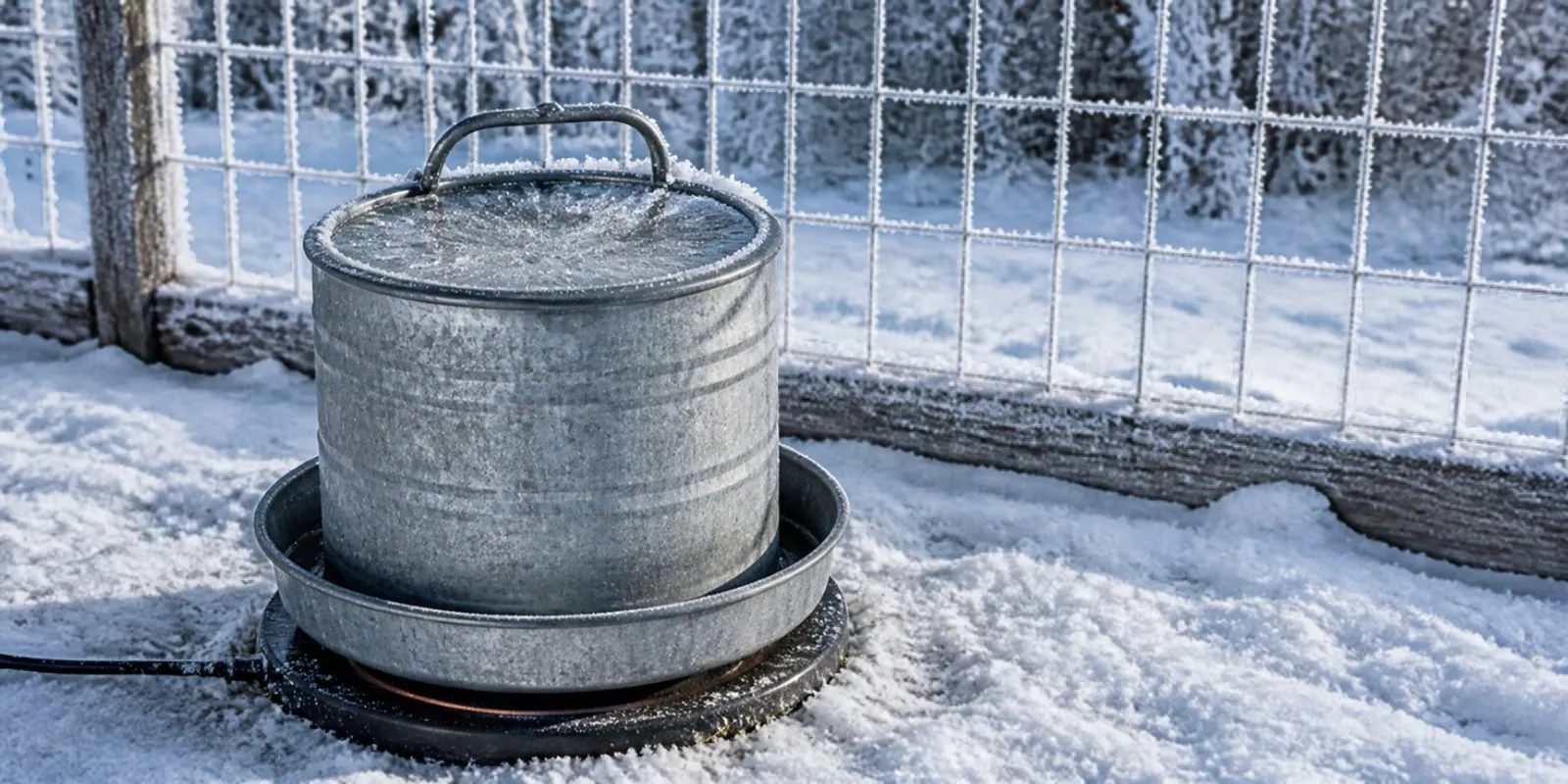
| Heated base under a metal fountain | Yes | Flocks already using a metal waterer | Base and cord must stay clear of bedding |
| Covered heated dog dish | Yes | A few birds, open-bowl drinking | Debris gets in if not covered well |
| Two waterers, swapped by hand | No | Coops with no electricity | Needs a thaw spot and a twice-daily visit |
| Rubber pan, tapped out | No | Mild frosts only | Freezes solid in a hard freeze |
Why unfrozen water matters so much
Chickens need free access to fresh, clean water at all times. According to University of Minnesota Extension, birds that cannot drink will stop eating. That has a knock-on effect: less feed means less energy to stay warm, and egg laying usually drops.
Cold weather also changes how much they eat. The same source says feed intake can rise by up to 25 percent in cold weather. A flock that is eating more needs steady water to go with it, so a frozen waterer at dawn is a real problem, not just an annoyance.
What you need
- One or two waterers sized for your flock. A spare is the cheapest insurance you can buy.
- A heated option if you have safe power: a plug-in heated plastic fountain, a heated base for a metal fountain, or a partially covered heated dog dish.
- A stand, cinder block or hanging bracket to lift the waterer off the floor.
- A thaw spot such as a garage, porch or mudroom for frozen waterers.
- A rubber or flexible pan for the no-power backup.
- For electric setups: equipment approved for use around poultry and livestock, and a plan for the cord that keeps it away from birds and bedding.
Step-by-step: set up an unfreezing water station
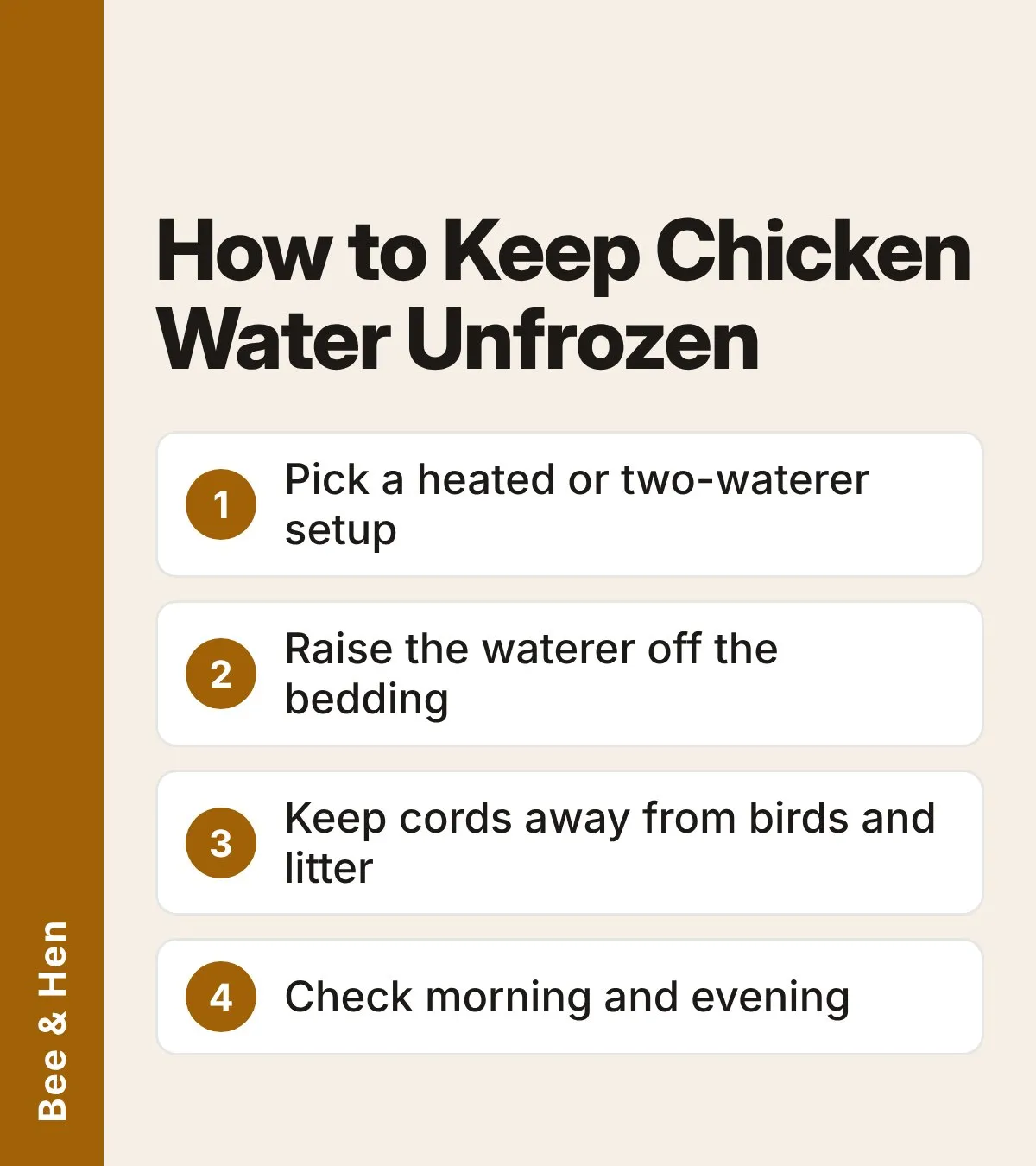
- Choose the spot. Place the waterer inside the coop or in a sheltered part of the run, out of the wind. Wind chills the water and speeds up freezing.
- Raise it. Set the waterer on a stand or block so birds cannot kick bedding or manure into it. Extension guidance also says to keep the heating element away from bedding.
- Plan the power. Run the cord so hens cannot peck or tangle in it, and keep wiring clear of water and flammable litter. Use only heaters approved for chickens or livestock, and follow the installation instructions.
- Add a thermostat where you can. Extension guidance notes that thermostats can help manage use and electricity costs, so a thermostat-controlled unit is a sensible choice.
- Fill and test. Fill the waterer, plug it in and check by touch an hour later that water is liquid and nothing is hot to the point of scalding.
- Set a routine. Check morning and evening. If the water freezes, take the waterer to the thaw spot and put the spare in its place.
No-power options that work
If your coop has no electricity, you can still keep water open most of the winter:
- The two-waterer swap. Keep one waterer in use and one thawing indoors. Swap them each morning and evening. This is the most dependable no-power method and the one extension guidance points to, along with keeping a backup on hand.
- Warm water at refill time. Adding lukewarm water when you swap buys extra time before ice forms. Avoid very hot water, which can crack some plastic waterers.
- Shelter and sun. A waterer placed out of the wind and where winter sun reaches it freezes more slowly than one in an exposed run.
- Flexible rubber pans. You can flip the ice out by stepping on or tapping the pan. They suit light frosts but not a deep freeze.
Electrical safety around the coop
Water, dust and dry bedding make a coop a poor place for improvised wiring. University of Minnesota Extension advises keeping wiring away from birds, water and flammable litter, using extension cords only briefly and never to power the coop, and having a professional electrician handle coop wiring. It also says to use only heaters approved for chickens and livestock and to follow their fire-risk warnings.
If you use a heat lamp for any reason, the same guidance says to use an approved heat bulb, avoid hanging the lamp by its cord, and use a caged lamp so the bulb cannot touch bedding. The coop also needs supplemental heat only when temperatures fall below 35°F (about 2°C), according to that source, so a heated waterer alone is usually enough for most mild-winter flocks.
Common mistakes
- Putting the waterer on the floor. It fills with bedding and manure and freezes faster. Raise it.
- Relying on one waterer. When it freezes or leaks, the flock has nothing. Keep a spare.
- Letting cords run loose. Chickens peck, and a damaged cord near water is a hazard.
- Using an extension cord as a permanent coop power supply. Extension guidance says not to do this.
- Skipping the evening check. Water that was open at breakfast can be solid by dusk on a cold day.
- Using a waterer that is too large. A big, mostly full container takes longer to thaw and is harder to carry. Match the size to your flock.
When to call a professional
Call a licensed electrician if the coop needs permanent power, if you are unsure how to protect an outlet from moisture, or if a cord or outlet feels hot, smells burnt or trips a breaker. Do not try to rewire a coop yourself. If birds seem lethargic or stop eating even though water is available, contact a veterinarian.
A simple daily routine
| Time | Task |
|---|---|
| Morning | Check water is liquid, swap in the spare if frozen, refill with lukewarm water |
| Midday (cold snaps) | Quick look at the waterer and cord |
| Evening | Refill, check the cord and heater, bring any frozen waterer to the thaw spot |
For wider coop prep, see our guide on how to winterize a chicken coop.
Sources
 Save
Frequently asked questions
Do chickens really stop eating if their water freezes?
Yes. Extension guidance notes that chickens need constant access to fresh, clean water and will stop eating without it. A frozen waterer can quickly cut into feed intake and, later, egg laying.
Can I use a regular heated dog bowl for chickens?
Extension sources list partially covered heated dog dishes as one workable option. Cover the bowl enough to keep droppings and bedding out, and keep the cord and heating element away from bedding.
How often should I check chicken water in freezing weather?
Check at least morning and evening, and more often on the coldest days. Keep a spare waterer so you can swap in a clean, unfrozen one while the frozen one thaws indoors.
Is it safe to run an extension cord to the coop?
Only briefly. Extension guidance says cords should never be used to power the coop long term, and that coop wiring is a job for a professional electrician.